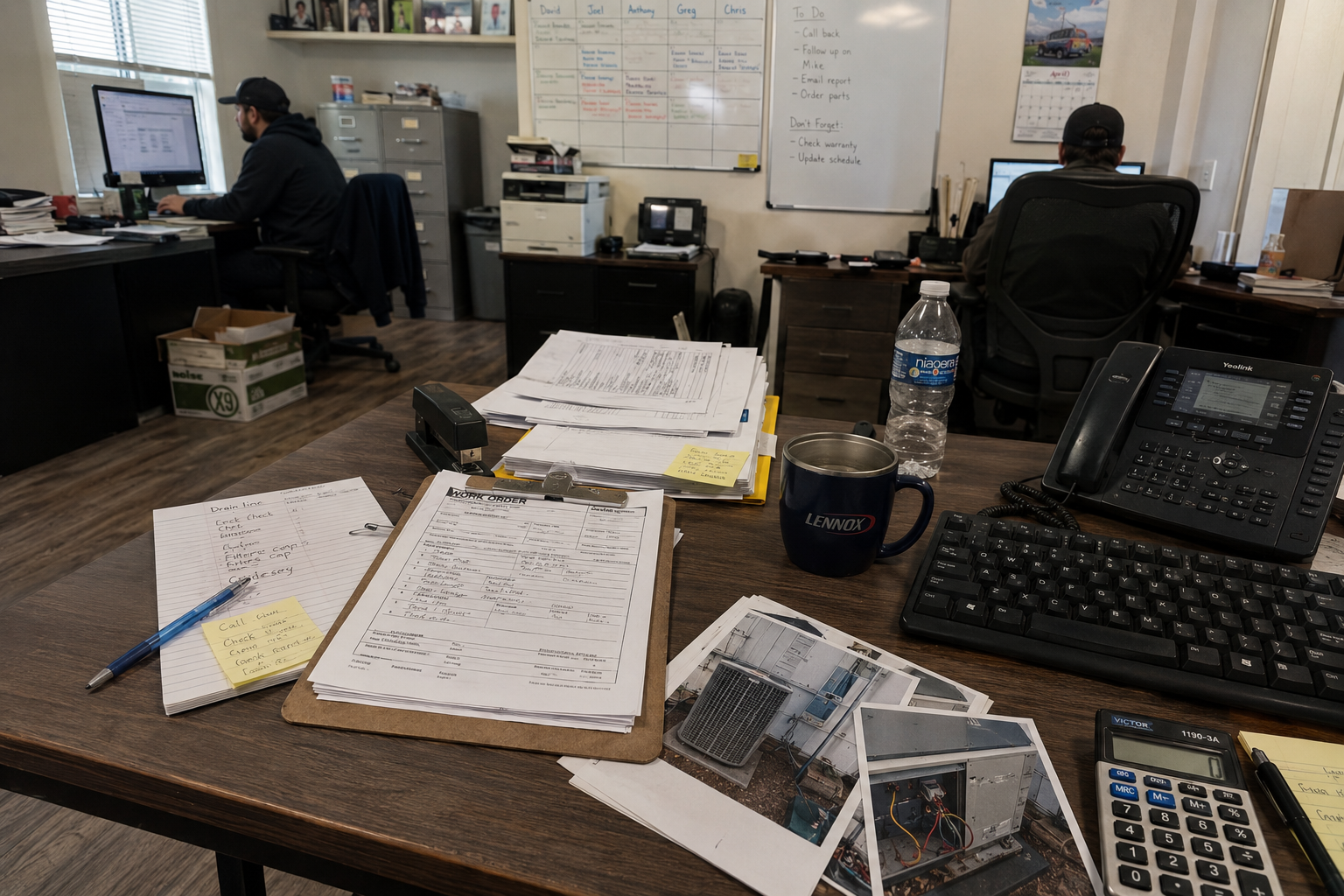
A service call doesn't end when the technician gets back in the truck. In many cases, that's when a different kind of work begins.
The office still needs to review the job, confirm what was completed, gather photos, check equipment information, prepare the invoice, and make sure everything is ready before sending it to the customer. If even one piece of information is missing, someone has to stop what they're doing to track it down.
Most business owners wouldn't describe that as a serious problem because, on any given day, it usually isn't. Someone makes a phone call, sends a text message, or asks the technician for one more detail. The missing information eventually shows up, the invoice goes out, and everyone moves on.
The trouble is that these situations rarely happen just once.
Over time, those small interruptions become part of the daily routine. Employees spend more time following up than moving work forward, invoices take longer to leave the office, and simple tasks begin requiring more conversations than they should. Nothing appears broken, but everything seems to take a little longer than expected.
This is one of the challenges that many service businesses run into as they grow. More technicians, more customers, and more jobs naturally mean more information moving between people. Sales, dispatch, field staff, office administrators, and accounting all depend on receiving accurate information at the right time. Every transfer creates another opportunity for something to be forgotten, delayed, or misunderstood.
Because the impact is spread across dozens of small moments, it's easy to underestimate how much it costs. A few minutes spent searching for photos doesn't seem important. Neither does correcting an invoice or making one extra phone call. But when those same interruptions happen hundreds of times throughout the year, they quietly consume hours of productive work and slow down the flow of revenue.
That's why operational problems aren't always obvious. They rarely arrive as a single major failure. More often, they show up as a collection of small inefficiencies that everyone has learned to work around.
Before assuming the answer is another software platform or another employee, it's worth taking a closer look at how information moves through the business. Sometimes the biggest opportunity isn't working faster. It's making sure the right information reaches the right person the first time.
Where are small delays costing your business more than they should?
Request a consultation to review where information, handoffs, and follow-up may be slowing the business down.